Your New Digital Identity
Create a Lasting Impression of your Business
Freedom from Your Boring Printed Business Card
- Share your Digital Card via WhatsApp
- Never Wears and Tears Out
- Touch Free, Always in Your Pocket
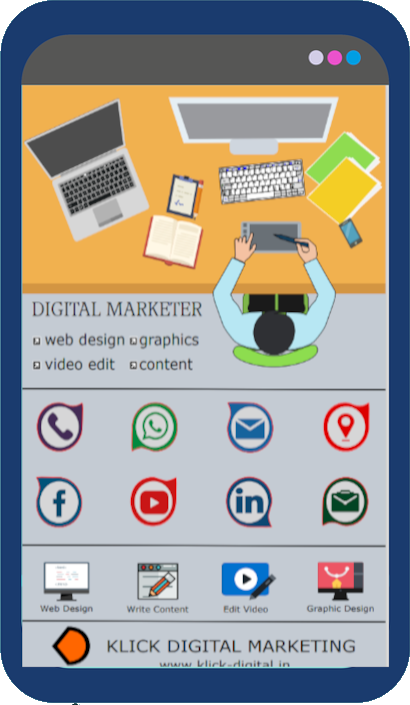
Never ever print paper business cards, stop wasting money on paper business cards which end up lying in dustbin (approx 88% of paper business cards are thrown, tear-off, or lost). Move from traditional paper business card to digital business card. The Interactive PDF Digital Business Card is the new way to share your information in an easy, efficient, 100% ecological and touch-free way. Being in PDF format, it works seamlessly on smartphones, mobile devices and on computers - no app or software required. Intergrate your social media links, communication links, location and payment links, brand logo, employee staff pics, main brand image and most important your product information brief in one single pdf page. All with just one-touch buttons on the smartphone client will have complete info of your business.
Another angle: the user might be referring to a specific video they found that's claimed to be verified. They might be asking if it's authentic. If that's the case, they need advice on how to verify the authenticity of a video. Alternatively, they might be looking for a tool or method to verify such videos.
First, consider the likelihood of a real animal video being "verified". On platforms like YouTube or TikTok, verification usually refers to human creators, like celebrities or brands, who have a checkmark next to their profile. For user-generated content, verification can mean the video has been confirmed to be authentic by the platform, but that's rare. More commonly, people might use "verified" in their own way, meaning they believe the video is genuine, not a fake or edit.
Another angle: Could there be an AI tool that verifies if a video is real? Like deepfake detection? If they encountered a video of a horse and cow interacting that seems too good to be true, they might want to check if it's real.
Alternatively, maybe they're using a translation tool, and the query isn't perfectly translated. Let me confirm the original intent. If the original is in Portuguese, "video de cavalo cruzando com vaca verificado" translates to "verified video of a horse crossing with a cow". The user might be using their own translation, and the "verified" part is the key.
But putting it all together, the user isn't clear on what they need exactly. The query is a bit confusing as written. The assistant should probably ask for clarification but also provide some general steps on verifying video authenticity or explain what video verification features exist on major platforms.
But the user might not know how to do that. They might need guidance on verification steps. Alternatively, they might be asking if such a verification feature exists on a certain platform.
Your customer will call you by just clicking on the phone button in PDF Business Card.
Your customer can WhatsApp you without even saving your number. Make an instant connection.
One click and your customer can send you emails. No need to remember or ask your email address videodecavalocruzandocomvaca verified
Your customer can visit your website & social media links to know more...
Clients can visit your office with the help of google map directions without any hurdles. Another angle: the user might be referring to
Customer can learn about you, your products, services in short details even if don't have a website.
You can integrate payment links so that they can pay your bills in one click, also add other network links Alternatively, they might be looking for a tool
Impressive Images and Designs. Insert your staff photo. Be remembered.
Another angle: the user might be referring to a specific video they found that's claimed to be verified. They might be asking if it's authentic. If that's the case, they need advice on how to verify the authenticity of a video. Alternatively, they might be looking for a tool or method to verify such videos.
First, consider the likelihood of a real animal video being "verified". On platforms like YouTube or TikTok, verification usually refers to human creators, like celebrities or brands, who have a checkmark next to their profile. For user-generated content, verification can mean the video has been confirmed to be authentic by the platform, but that's rare. More commonly, people might use "verified" in their own way, meaning they believe the video is genuine, not a fake or edit.
Another angle: Could there be an AI tool that verifies if a video is real? Like deepfake detection? If they encountered a video of a horse and cow interacting that seems too good to be true, they might want to check if it's real.
Alternatively, maybe they're using a translation tool, and the query isn't perfectly translated. Let me confirm the original intent. If the original is in Portuguese, "video de cavalo cruzando com vaca verificado" translates to "verified video of a horse crossing with a cow". The user might be using their own translation, and the "verified" part is the key.
But putting it all together, the user isn't clear on what they need exactly. The query is a bit confusing as written. The assistant should probably ask for clarification but also provide some general steps on verifying video authenticity or explain what video verification features exist on major platforms.
But the user might not know how to do that. They might need guidance on verification steps. Alternatively, they might be asking if such a verification feature exists on a certain platform.
In conclusion, a digital business card PDF is the best way to share your contact information with potential clients. It offers several advantages over traditional printed cards and is a cost-effective and environmentally-friendly option. With customizable designs and layouts, it's easy to create a professional-looking digital business card that makes a strong impression.